Showing posts with label Reading Comprehension. Show all posts

Tuesday, July 16, 2013

Comprehension Approach for any Book


Before Reading

Prompts to Try
I predict this book is about _______________________________________ because . . .

I am excited to read this book because I heard ________________________

KWL Charts

If a book is non-fiction, or has non-fictional elements (such as historical fiction) you might also try a KWL chart.  If you need to know what a KWL chart is and how it works, here is a link with more detail.

While Reading

Prompts to Try
The first prompt is about visualizing while the second is about asking questions.  The first, helps a child realize they are imagining things in response to what they read, slow down and notice what they are picturing and learn how to communicate those pictures.  The second prompt can ask questions that are "real life" like (if reading the Kaya series from the American Girl Collection) "wonder what camas bulbs taste like."  OR it can be about what will happen next, "wonder if speaking rain will survive her fall into the river."  I suggest asking kids to fill in each of these prompts at least once/chapter. 

When I read, "______" it made me picture or imagine . . .

When I read, "______" it made me wonder . . . 

Questions to Ask
  • What does this page mean?
  • Can I explain what is happening here in one sentence? (summarize)
  • Why is (character) making this choice or doing/saying this thing?
  • How do the perspectives of (character A) and (character B) differ?  How do they match?
  • What do I know that the character doesn't know?
  • What do I predict will happen next?

After Reading  

Ask kids to Summarize
Summarizing is something far more difficult for elementary kids than most of us think - so be patient.  A summary can be done as a formal writing experience, or just be done orally, or even in pictures for really young kids.

If you choose to have you student/child write a formal summary, you might help them by creating a chart such as the one below.  You'll also need to point out they are  supposed to include the most important experience or struggle in the chapter not just any experience or struggle.

EXAMPLE for youngest, newest writers:
Summarize the book:  In this book (main character)  (has biggest experience or struggle) and (learns -choose the most important lesson . . .)

Of course older kids can handle writing a longer summary and include more detail. Here is an example for slightly older, but still learning writers (say third grade to fourth or fifth grade)

Identify the Setting: Place and Time should both be included:

Describe the Main Problem in the Story:

Describe the Reaction the Main Character has to the Main Problem in the Story:

List the Resolution to the Main Problem (or, if you are trying not to give away secrets, you COULD just answer this for your teacher, but not include it in your synopsis and ask "will (main character) find a way?" instead.

For a NON-FICTION book try:

What is the main subject of the book?

List two to four important ideas (big ideas) a person should be able to remember about the main topic at the end of reading the book (hint, ideas that are repeated and ideas that have lots of evidence and examples are usually the big ideas).

What was the most interesting thing you learned from reading this book?

Asks Kids about Recommendations
 
Who would they recommend the book to and why?
To help them specify clearly, you might say - would ALL of your friends like this book? none of them?  Can you think of one friend that might like it for a particular reason?  OR perhaps you think someone you know that is a  little older might like it even if you didn't because the reading was really hard. . .  Insist on specificity.

Have them Write a Book Report
A book report will usually summarize the book, state a recommendation (or an "Avoid this book.  It was awful.") and give bibliographical information.

Here is a link about helping a child write up a book report if needed.

Sunday, November 25, 2012

The Legends of Arthur and His Knights

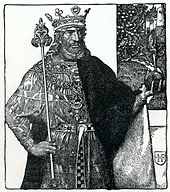
One of the Books On Alice's Reading List for Second Grade was The Story of King Arthur and His Knights, a retelling of the Howard Pyle version of the tale and adapted by Tania Zamorsky.  There are actually many versions of this tale -even written in easier-to-read formats.  We also read, Arthur of Albion by John Matthews and Pavel Tatarnikov (this one was beautifully illustrated) and Knights of the Round Table by Gwen Gross.  Some of the tales are also told independently such as, "The Kitchen Knight - A Story of King Arthur" by Margaret Hodges and retold by Trina Shart or Young Guinevere by Robert San Souci.  If you'd like a digital take on Arthur, you might try this link when you are done, please let me know what you thought of it by adding a comment.

Before reading the Legends of King Arthur and his knights, you may want to cover a little information about Medieval Knights so your student(s) will have a firm grasp on related vocabulary and concepts regarding the chivalric code.  Knights will offer you the vocabulary (in italics) and links and resources you may desire to do just that.

At some point during a unit where you read about the legendary King Arthur, you'll probably want to discuss the differences and similarities between legend and myth.  To do so, the article, "Fiction or Biography? Legends of King Arthur" will provide helpful historical resources.

I believe it is great fun to have kids read a few legends and a few Tall Tales and compare.  Then, have kids turn their own life story into "Legend,"  OR if father's day is nearing, dedicate the story to Dad by turning him into a Legend for a fabulously fun Father's Day Gift.  Alice was still a bit to new to writing to get much out of her at the time of writing this article, but I will try again.

For us, most of the objectives while reading the stories were to learn more about characteristics of the characters within a story but the tales can be used to discuss plot, setting and themes as well.

Some generic questions to ask after you have read about King Arthur and his Knights that should work with any version you might choose to use.

  1. Name an important characteristic of Arthur.  Then list three things he did or said that demonstrate this quality.
  2. Which knight was your favorite?  Why?
  3. Which legend of the Knights was your favorite tale?  Why?
  4. Why is it important that Arthur's Table was round?
  5. Describe a lesson Arthur learned and how he learned it.
  6. Who was Merlin and what was his role in Arthur's Life?
  7. Name one Antagonist and describe at least one problem he/she caused for Arthur and how Arthur solved the problem.
  8. Name at least one of the Women in the life of Arthur and his Knights.  Describe her story.
  9. What rules were included in the code of chivalry the Knights of the Round Table followed.  Why were these rules important.
  10. Why do you think tales about Arthur and his Knights have been told for so many years?  Why do we still enjoy them?

Teen and Pre-teen:

After Reading some of the Tales with your preteen/teenager, you might want to checkout a book from this booklist to read.  Ask your child to defend how the book is an Arthurian Legend.  What similarities does the book have to the legends you read together?  What is the message of the newer book?  Does the newer story have any similar themes? characters? setting? plot? How does the book your child read differ? Which version does your child like better and why?  Just for fun, you might view some episodes of Merlin from the BBC.  I have not seen, "King Arthur" with Clive Owen, but it might be of interest as well.  I know Merlin is available on Netflix streaming.  No, Merlin does not follow the original legends even closely, but that is part of the fun and of course you can discuss comparisons as part of the experience.

Primary or Elementary:

For a full guide regarding King Arthur, the associated history and completing a unit regarding King Arthur and his knights, you will find this article quite useful.  This website has further links and information to use with your primary student while this website sums up the tales that are most popularly told about King Arthur (also at a primary level).  After we were done with all the reading, we also watched Disney's Sword in the Stone just for fun.  "The Sword in the Stone" is available through Netflix and, true to Disney fashion, tells the tales in an entirely different way to the legends.  It simply creates a great opportunity to ask your child to make comparisons.  Create a chart with two columns one titled "the same" and the other "different" or use a Venn Diagram with your little one.

More To Read:

If your late elementary/middle school child LOVES reading and wants to read more.  Try the series, "The Dark is Rising" by Susan Cooper.  It has a Lexile score of around 830 (depending on the specific book) and is for readers generally between fifth and ninth grade.  You might also try books from the list linked here and here for your even slightly older kids.

Something To Watch:

Sir Gawain and the Green Knight - BBC Documentary retelling interspersed with explanation and wonderful complimentary visuals.  The film shows Simon Armitage as he journeys in the footsteps of Gawain and considers Gawain as a possible man and how it must have been for Gawain as well as the literary merits of original poem.  The video is probably well suited to teens, but is not likely to engage the interests of younger kids.  Preview the video to determine if you think it a good experience for your child and his/her particular interests and appropriateness of subject matter.